

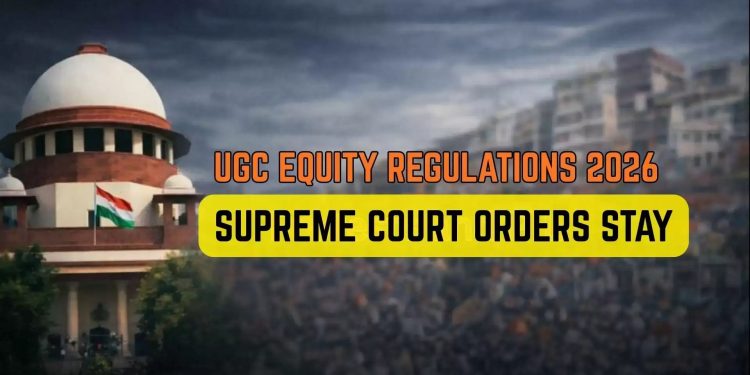
The Supreme Court on Thursday stayed the University Grants Commission’s equity regulations aimed at preventing caste-based discrimination in higher education institutions, triggering mixed political reactions across the spectrum. While major opposition parties welcomed the interim relief, the CPI-ML-Liberation expressed strong disapproval of the court’s observations.

The top court observed that the UGC’s Promotion of Equity in Higher Education Institutions Regulations, 2026, were prima facie vague, open to misuse, and capable of having sweeping consequences that could divide society. It also directed the Centre and the UGC to file their responses by March 19 on petitions challenging the regulations.

Leaders from the Congress, Samajwadi Party, Bahujan Samaj Party, and Trinamool Congress hailed the stay as timely and necessary.

BSP chief Mayawati said the regulations had created an atmosphere of social tension across universities, and the court’s intervention was appropriate under the circumstances. She added that the situation could have been avoided had the UGC consulted all stakeholders and ensured fair representation in inquiry committees, in line with principles of natural justice.
 Samajwadi Party president Akhilesh Yadav also welcomed the order, stressing that both the language and intent of any law must be clear to prevent injustice. He said true justice ensures that no group is oppressed and no unfairness is inflicted on anyone, adding that ambiguity in rules often leads to social division.
 Congress leader Pramod Tiwari accused the ruling Bharatiya Janata Party of deliberately creating conflicts on religion and caste to divert public attention from pressing issues. Another Congress leader, Ranjit Ranjan, suggested that the regulations be referred to a parliamentary standing committee, stating that the government failed to clearly define the framework and did not take students into confidence, which led to nationwide protests.
Trinamool Congress leader Kalyan Banerjee termed the UGC guidelines unconstitutional and said the Supreme Court had taken the correct step by staying them.
In contrast, the CPI-ML-Liberation said it was deeply appalled by the court’s observations, describing them as reflecting a myopic attitude towards the lived realities of caste discrimination. The party cited UGC data showing that complaints of caste-based bias in universities and colleges rose by 118 percent between 2019 and 2024. It argued that discrimination remains a harsh daily reality in educational institutions and warned against dismissing equality measures as divisive.
Rashtriya Janata Dal leader Manoj Jha also weighed in, remarking that history shows judicial neutrality often depends on which status quo the law chooses to protect.
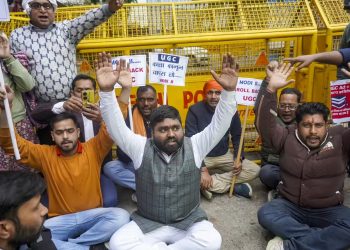
The regulations were challenged on the grounds that they narrowly defined caste-based discrimination as affecting only Scheduled Castes, Scheduled Tribes, and Other Backward Classes, raising concerns about exclusion and interpretation. With the stay now in place, the court will examine detailed responses before deciding the future course of the regulations.




Discussion about this post