

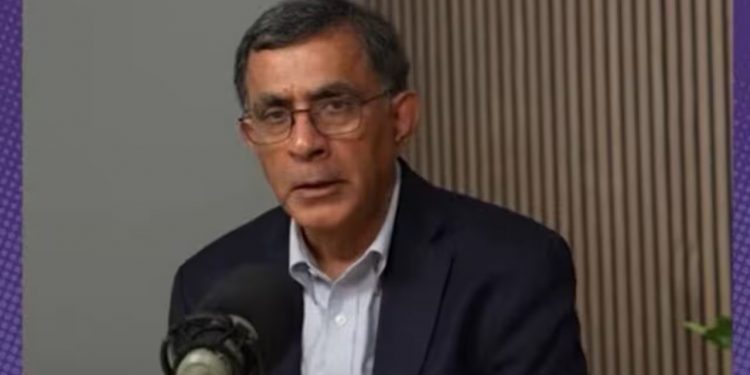
India continues to spend vast public resources on loss making public sector enterprises, a trend that has not diminished from the Nehruvian era to the present government, according to Devesh Kapur, Professor of South Asian Studies at Johns Hopkins University. He made these observations while discussing his book A Sixth of Humanity Independent India’s Development Odyssey, co authored with former Chief Economic Advisor Arvind Subramanian.
Speaking at a discussion in New Delhi, Kapur said his research revealed the sustained fiscal burden of central public sector enterprises.

He noted that while data from state run enterprises remains difficult to compile due to poor record keeping, central PSU data clearly shows their high economic cost when measured against government borrowing.
Kapur explained that the opportunity cost of PSUs has ranged between 1.5 and 2.5% of GDP for nearly five decades. This calculation compares the rate of return of public sector enterprises with the government’s borrowing rate. According to him, this persistent gap represents a massive drain on public finances year after year. He highlighted that the financial impact becomes starker when compared to alternative spending priorities.
Kapur said, states could have doubled their healthcare expenditure if PSUs had not continued to incur losses. Similarly, the central government could have nearly doubled annual infrastructure spending over the last fifty years if these enterprises had performed better.

Contrary to the belief that state led enterprise expansion is a thing of the past, Kapur pointed out that the number of PSUs has actually increased in recent years. He noted that around 70 public sector enterprises were established during the Nehru era, while 84 have been set up under the current government.
Comparing capital expenditure in constant prices, Kapur said investment in PSUs during the Nehruvian period amounted to about one lakh crore rupees in real 2024 terms. In contrast, capital expenditure during the Modi years has reached nearly twenty two lakh crore rupees in real 2024 prices. While this spending forms a smaller share of GDP today due to economic growth, the absolute fiscal burden remains significant.
He observed that the nature of public sector enterprises has changed over time. Earlier, most PSUs were concentrated in manufacturing, whereas recent additions are largely in the energy and infrastructure sectors. Despite this shift, Kapur stressed that the issue of continued losses and repeated government support remains unresolved.
Citing the telecom sector as an example, Kapur pointed to the government’s bailout of BSNL and MTNL between 2019 and 2023, amounting to over three lakh crore rupees. He questioned the rationale for such spending when strong private telecom companies already dominate the market and the prospects of revival for these state run firms remain limited.
Kapur also expressed concern over the lack of political debate surrounding such large expenditures. He noted that public sector expansion in the Nehru era was accompanied by intense parliamentary discussions, whereas recent large scale spending on PSUs has attracted little scrutiny from either the ruling party or the opposition.



Discussion about this post