

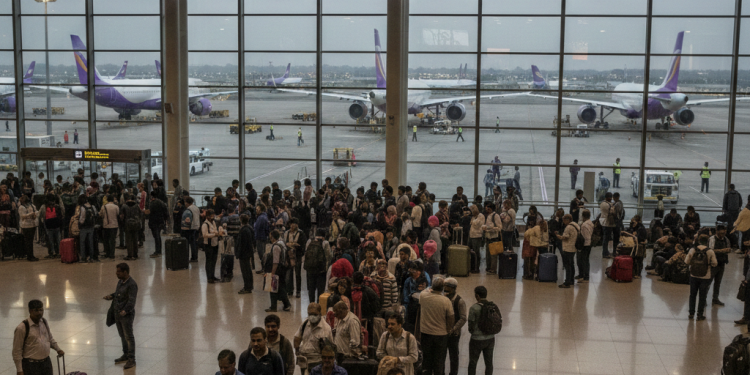
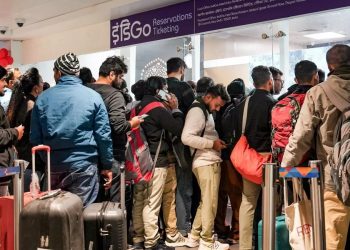
IndiGo’s operational turmoil stretched into a second consecutive day on Saturday, with more than 400 flights cancelled across Bengaluru, Mumbai, Delhi, and Hyderabad airports, according to industry sources. The disruptions follow the airline’s record 1,000+ flight cancellations on Friday, marking one of the most severe operational crises faced by any Indian carrier in recent years.
At Bengaluru airport alone, 124 flights were scrapped, while Mumbai recorded 109 cancellations. Delhi saw 106 flights grounded, and Hyderabad reported 66 cancellations, creating widespread travel chaos at some of the country’s busiest aviation hubs.
IndiGo CEO Pieter Elbers, who addressed passengers through a one-way video message on Friday after days of silence, apologised for the inconvenience and said the airline expected fewer than 1,000 cancellations on Saturday, signalling a slight improvement but far from normal operations.
Regulatory Relief Sparks Safety Debate
The Directorate General of Civil Aviation (DGCA) had granted IndiGo temporary relaxations to the revised Flight Duty Time Limit (FDTL) norms, which included rolling back the extended night-duty window (12 am–6 am) to the earlier 12 am–5 am, and raising the limit on night landings for pilots from two to six. The relief was intended to ease crew shortages and stabilise operations.
However, the move has drawn a sharp response from the Airlines’ Pilots Association (ALPA) India, which labelled the DGCA’s decision as “unsafe” and “selective.” The body warned that diluting fatigue-management standards “places millions of passengers at heightened risk” and undermines the scientific basis of the norms mandated by the Delhi High Court.
Following a meeting with pilot unions on December 5, the Ministry of Civil Aviation announced that implementation of the revised FDTL regulations would be put on hold. ALPA India criticised the decision, stating that suspending the norms contradicts court directives and delays critical fatigue protections for cockpit crew.
Long-Standing Opposition to New Duty-Time Rules
IndiGo was among the first airlines to resist the new FDTL guidelines introduced in early 2024, arguing that carriers needed more time to adapt due to increased crew requirements. Other domestic airlines, including Air India, initially pushed back as well, but the DGCA eventually rolled out the rules in phases after judicial intervention.
The first phase took effect in July, while the second—limiting pilots to two night landings per duty cycle—was enforced from November 1, contributing to manpower shortages and operational strain for several airlines.
As IndiGo grapples with stabilising its schedule, passengers across key metros continue to face long queues, last-minute changes, and widespread uncertainty—highlighting the broader challenges of balancing operational demands with aviation safety standards in India’s fast-growing aviation market.




Discussion about this post